
Click here to download a PDF of this information.
Irritable Bowel Syndrome (IBS)
 If you suffer from the following ongoing symptoms, you might have IBS:
Abdominal Pain
Bloating
Constipation
Diarrhea
IBS is a chronic, often debilitating, functional gastrointestinal (GI) disorder with symptoms that include abdominal pain, bloating, and altered bowel behaviours, such as constipation and/or diarrhea, or alternating between the two. In IBS, the function, or movement, of the bowel is not quite right. It is the most common GI condition worldwide and the most frequent disorder presented by individuals consulting a gastrointestinal specialist (gastroenterologist).
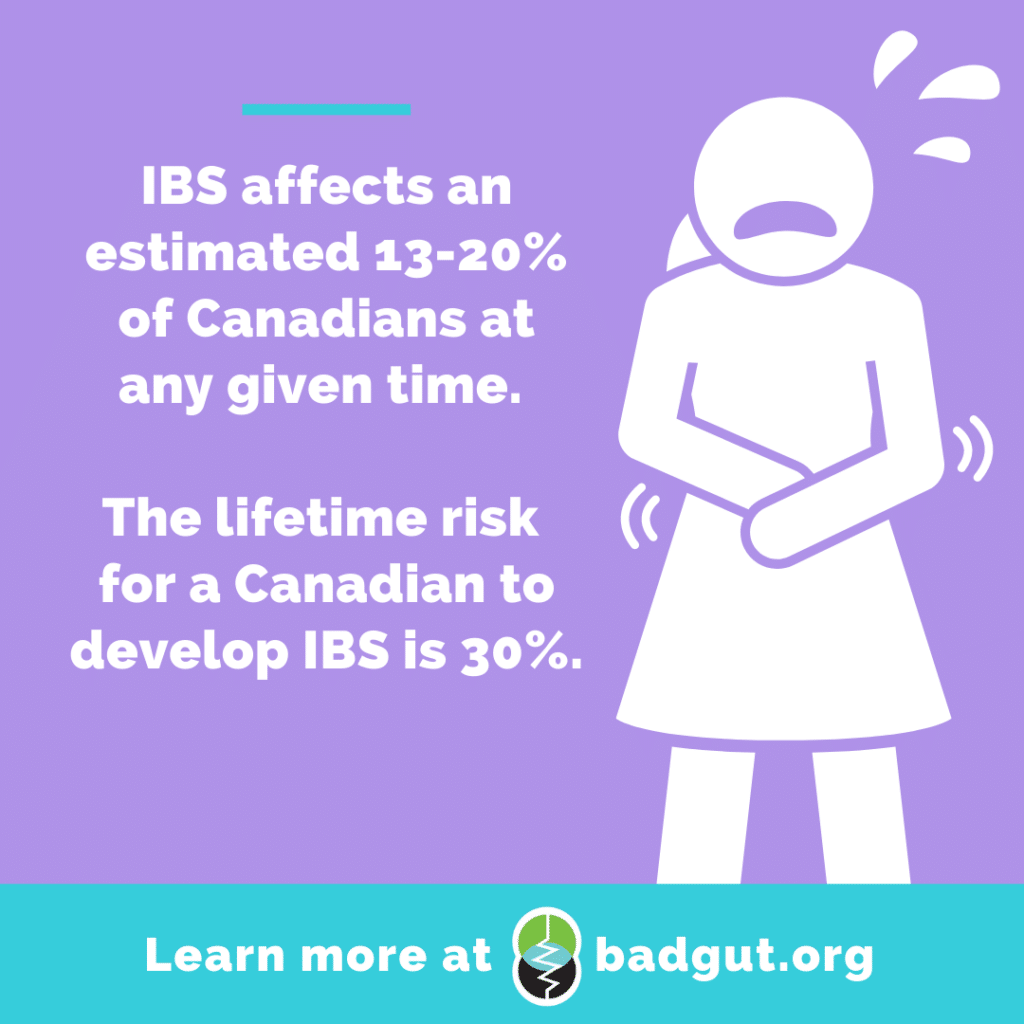
IBS can begin in childhood, adolescence, or adulthood and can resolve unexpectedly for periods throughout an individual’s lifespan, recurring at any age. Studies show it could affect as many as 13-20% of Canadians at any given time. The lifetime risk for a Canadian to develop IBS is 30%. In Canada and most Western nations, IBS seems to arise significantly more frequently in women than in men, but the reason for this remains unclear.
Although each person has a unique IBS experience within the range of known symptoms, this condition can significantly decrease a person’s quality of life. Despite this, only about 40% of those who have IBS symptoms seek help from a physician. IBS frequently affects individuals of working age, which can lead to an increased financial burden when they are too sick to work, either by taking many sick days (absenteeism) or not being able to produce as well while at work (presenteeism).
Over the years, some have called this collection of symptoms by many names, including mucous colitis, nervous colon, spastic colon, and irritable colon, but these are all misleading, mostly because IBS is not limited to the large intestine (colon). Sometimes, IBS is confused with colitis or other inflammatory diseases of the intestinal tract, but the difference is clear – in IBS, inflammation does not seem to accompany symptoms.
IBS Videos
Part 1: IBS Overview
Irritable bowel syndrome (IBS) is a functional gastrointestinal disorder that affects 13-20% of Canadians. Watch this video for a general overview of IBS.
Part 2: IBS Treatments
Here we review the different types of treatments available to those with IBS, including diet and lifestyle changes and various medications.
What can you eat if you have IBS?
Watch this video for some tips for using food and nutrition to help manage IBS symptoms.
Thirty-Second IBS Test
1. Have you had abdominal pain at least one day a week during the past 3 months?
2. If yes to above, have you experienced at least two of the following:
- Pain associated with bowel movements?
- Pain associated with a change in the frequency of bowel movements?
- Pain sometimes associated with constipation or diarrhea?
If you answered “no” to either question, then it is likely that you do not have IBS; however, you might still want to consult a physician if you answered “yes” to any question.
If you answered “yes” to both questions, then you might have IBS. You’re not alone! Many people live with this common digestive disorder. There are treatment options available to decrease or eliminate your symptoms and improve your quality of life. Please read this article carefully and contact your physician, pharmacist, other healthcare professional, or the Gastrointestinal Society for further help.
Symptoms of IBS
Most people have experienced abdominal cramping, bloating, constipation, or diarrhea at some point in their life. However, those who have IBS experience these symptoms more frequently and intensely, to the extent that they interfere with day-to-day living.
A person who has IBS likely has a sensitive digestive system with heightened reactivity, so that the GI tract responds quite differently to normal gut stimuli, such as the passage of solids, gas, and fluid through the intestines. These unusual movements may result in difficulty passing stool, or sudden, urgent elimination. Up to 20% of those who have IBS report suffering from untimely passage of stool. Individuals with IBS may also experience straining to pass stool along with a feeling of incomplete evacuation (tenesmus) and immense relief of pain/discomfort when gas or stool finally passes. A stringy substance (mucus) may cover the stool.
Individuals might have different combinations of symptoms, with one dominating while the others occur more randomly and unpredictably. These bowel experiences and their unpredictability can lead to a high degree of anxiety for those with IBS. Stool consistency may vary enormously, ranging from entirely liquid to being so firm and separated that it resembles small pebbles. External factors, such as stress, can affect stool consistency. IBS has different sub-groups, which are associated with stool consistency.
- IBS-D is when the digestive system contracts quickly, transiting products of digestion rapidly through the digestive tract, resulting in frequent, watery bowel movements (diarrhea).
- IBS-C is when the digestive system contracts slowly, delaying transit time for products of digestion, resulting in hard, difficult to pass, infrequent stools (constipation).
- IBS-M is when the transit time throughout the digestive tract fluctuates, causing a mix of both diarrhea and constipation, often alternating between the two. These extreme stool consistencies can sometimes even occur within the same bowel movement.
Intestinal pain can occur when material in one section of the gut passes through slowly while material in another section passes quickly. In addition, prolonged contractions of the bowel might prevent the normal passage of air and trigger bloating, belching, and flatulence. Bloating could become so severe that clothing feels tighter and abdominal swelling becomes visible to others.
Pain manifests in many ways with IBS. It can be ongoing or episodic, present sharply and resolve rapidly, occur occasionally or frequently, and move from one location in the bowel to another very quickly. Digestive pain often occurs following a meal and can last for hours. Those who have IBS tend to have a quicker and more intense reaction to digestive tract pain stimuli than do those who do not have IBS.
Results of a survey we conducted – with 2,961 qualified respondents – showed that there is a wide range of pain levels among those who have IBS. When rating the severity level of pain experienced at some point during the past three months, 39% said their abdominal pain was mild, 53% said it was moderate, and 31% said it was severe. Only 4% of survey respondents did not experience abdominal pain in the past three months. Additionally, more than 62% of those with IBS indicate that their pain continued after bowel movements.
Other IBS Experiences
Sleep disturbances, fibromyalgia, back pain, chronic pelvic pain, interstitial cystitis, temporomandibular joint disorder, post-traumatic stress disorder, and migraine headaches are common in those with IBS. Some women also report discomfort during sexual intercourse (dyspareunia). Our survey found that 32% of respondents had some form of mood disorder and 27% an anxiety disorder. We also found that respondents had other digestive conditions, such as the 27% who had gastroesophageal reflux disease (GERD) in addition to IBS.
The majority of people with IBS indicate that their symptoms interfere with everyday life. Those with IBS-D or IBS-M often feel they cannot engage in work or social activities away from home unless they are certain there are easily accessible bathroom facilities available. Some individuals with IBS-C are often in such pain that they find even slight body movements uncomfortable. Pain and frequent bowel movements or preoccupation with an inability to eliminate stool can make school, work, and social situations difficult. In our survey, 46% of those who work or go to school said they miss one or more days in an average three-month period due to their IBS symptoms.
Individuals with IBS might experience a diverse range of emotions related to the condition that vary in intensity, and may include anxiety, depression, shame, fear, self-blame, guilt, anger, and loss of self-esteem. Psychological management of IBS can often help reduce these symptoms.
Download a PDF of our IBS Global Impact Report to learn more about the burden of IBS.
Diagnosing IBS
As the symptoms of IBS are varied and there are no specific physical tests to determine whether an individual has IBS, part of the diagnostic process is to rule out other diseases. Typically, your physician will go through several steps to reach an IBS diagnosis.
Medical History
Your physician will review your medical history, considering bowel function pattern, the nature and onset of symptoms, the presence or absence of other symptoms, and warning signs that might indicate a different diagnosis. It is important to note what symptoms do not relate to IBS, which include weight loss, blood in the stool, and fever. If the need to defecate wakes you from your sleep, you should report this to your physician as it is not typical of IBS and could have other implications.
Bowel pain and uterine/ovarian pain may be difficult to distinguish from each other, so coexisting gynecological conditions might delay or confound an IBS diagnosis in women.
Physical Examination
During a physical evaluation, the bowel may have involuntary jerky muscular contractions (spastic) and seem tender, although the physical health of the bowel usually appears normal in other respects.
Investigative Testing
A physician might request tests to rule out other diseases. In performing a scope, physicians view the intestinal tract with an instrument that enters the body via the mouth (gastroscopy) or the anus (colonoscopy/sigmoidoscopy). The scope is a hollow, flexible tube with a tiny light and video camera.
A physician may also request routine blood and stool tests to rule out known organic diseases. Some symptoms of celiac disease overlap those of IBS, so a family history of this disease might be a reason to test for it. The fecal calprotectin test available in Canada can differentiate IBS from inflammatory bowel disease (IBD), and a newly developed blood test in the U.S. shows promise in identifying IBS-associated anti-Cdtb and anti-vinculin antibodies.
A physician makes a diagnosis of irritable bowel syndrome after taking these steps and considering the nature of the individual’s symptoms in relation to the information detailed in the Thirty-Second IBS Test hat is located near the top of this page.
Possible Causes of IBS
While we do not know for sure what causes IBS, it is a multifactorial disorder that likely involves an interaction between the GI tract, bacteria in the gut, the nervous system, and external factors, such as stress.
Although not proven, theories exist as to factors that influence IBS symptoms, including:
- neurological hyper-sensitivity within the GI (enteric) nerves
- physical and/or emotional stress
- dietary issues such as food allergies or sensitivities, or poor eating patterns
- use of systemic antibiotics for GI infection
- bile acid malabsorption
- the amount or pattern of physical exercise
- chronic alcohol abuse
- abnormalities in GI secretions and/or digestive muscle contractions (peristalsis)
- acute infection or inflammation of the intestine (enteritis), such as traveller’s diarrhea, which may precede onset of IBS symptoms
The GI system is very sensitive to adrenalin – the hormone released when one is excited, fearful, or anxious – and to other hormones as well. Changes in female hormone levels also affect the GI tract, so IBS symptoms may worsen at specific times throughout the menstrual cycle. Since these hormones can affect the transit time of food through the digestive tract, this might account for the predominance of IBS in women, although direct evidence is still lacking.
It is important to note that since there is no definitive cause of IBS, many promoted potential ‘causes’ and advertised ‘cures’ of this syndrome are simply speculation.
While irritable bowel syndrome is chronic and painful, there is no evidence for a relationship between this disorder and an increased risk of more serious bowel conditions such as inflammatory bowel disease or colorectal cancer.
Management of IBS
The GI tract is an extremely complex system, influenced by many nerves and hormones. The types of food eaten, the frequency and environment of eating, as well as various medications affect both the secretions and motility of the intestine.
The most important aspect of IBS treatment is to understand the unique nature of your symptoms and any potential aggravating or triggering factors. It is also helpful to recognize that it may take time before bowel function returns to a more normal state and that symptoms could resolve and then recur.
Dietary and Lifestyle Modifications
The bowel responds to how and when a person eats, so it is important to eat regular, well-balanced, moderately sized meals rather than erratic, variable meals. Occasionally, IBS symptoms improve by allowing sufficient time for regular eating and bathroom routines. In addition, maintaining a healthy sleep schedule and getting a moderate amount of exercise can help reduce symptoms.
Some individuals report that dietary fats and the food additive monosodium glutamate (MSG) trigger symptoms. Some find symptoms worsen when consuming a large volume of liquids with meals. Others find that cooking vegetables and fruits lessens IBS symptoms, compared to when eating them raw. Those with IBS might need to avoid or decrease consumption of GI stimulants such as caffeine, nicotine, and alcohol, particularly if the predominant symptom is diarrhea.
Having IBS does not necessarily mean you produce more gas, but your intestines might be highly sensitive to the passage of gas. Reducing the ingestion of air, which is the major source of intestinal gas, and avoiding large quantities of gas-producing foods can help. To decrease swallowed air, avoid chewing gum, gulping food, drinking carbonated beverages, washing food down with liquids, and sipping hot drinks. Poor-fitting dentures, a chronic postnasal discharge, chronic pain, anxiety, or tension may also contribute to increased air swallowing.
One dietary therapy for IBS is the low FODMAP diet. FODMAP is an abbreviation for Fermentable Oligosaccharides, Disaccharides, Monosaccharides, and Polyols. These are the names of poorly digested carbohydrates, which travel into the large intestine where the resident bacteria ferment them. For many individuals, these foods do not cause any problems, but some who have IBS find that these foods worsen their symptoms. The diet involves avoiding specific foods for six to eight weeks to see if symptoms subside. If the symptoms improve, you can slowly reintroduce FODMAPs into the diet to a tolerable limit. A wide variety of foods contain FODMAPs, so removing them from your diet long-term can increase your risk of nutritional deficiencies. While the results of studies conducted on the low FODMAP diet show promising results, it does not help everyone, and we need further research to figure out why. There is also a simplified low FODMAP diet that might be easier to follow.
It is important to note that IBS is highly variable, and each person can experience different triggers. By keeping a food intake diary and noting any adverse reactions, you can quickly identify and remove problematic food from your diet and determine an approach that works best for you. Be sure to consult a registered dietitian before eliminating any food group long-term. For more information on eating a balanced diet, consult Canada’s Food Guide.
Fibre
A key step in controlling the symptoms of IBS is to increase dietary fibre from plants, which the human body cannot digest on its own. The fibre content of food stays the same with cooking, although this process may change its effect within the gut. When considering fibre, it is important to look at both the amount and type (insoluble or soluble).
Gradually increase your fibre intake and make sure to increase the amount of water you drink as well. This will minimize any adverse effects that may arise from a sudden dietary change. Your physician or dietitian may recommend you supplement your diet with a commercially prepared concentrated fibre compound, such as inulin (Benefibre®) or psyllium husk (Metamucil®).
Insoluble fibres increase stool bulk, increase colonic muscle tone, and accelerate the transit time of gastrointestinal contents, thus relieving mild constipation.
Water-insoluble fibres include:
- lignin (found in vegetables)
- cellulose (found in whole grains)
- hemicellulose (found in cereals and vegetables)
Soluble fibres form gels when mixed with water, making the bowel contents stickier and resistant to flow (viscous) so that food stays in the digestive tract longer. This is important for people who suffer from diarrhea.
Water-soluble fibres include:
- pectins (e.g., apples, bananas, grapefruit, oranges, strawberries)
- gums (e.g., cabbage, cauliflower, peas, potatoes, oats, barley, lentils, dried peas, beans)
It is important to note that for some IBS-D patients, a diet excessively high in bran fibre might trigger more frequent diarrhea, while other types of fibre could still be helpful. Consult a physician or dietitian if you have any questions regarding fibre in your diet.
Stress
The gut has its own independent nervous system (enteric nervous system). It regulates the processes of digesting foods and eliminating solid waste. This system communicates with the central nervous system, and they affect each other. Many with IBS report elevated levels of stress, which might relate to factors such as poor sleep habits, working too hard, and the excessive use of caffeine, alcohol, and/or tobacco. While IBS is not a psychological disorder, stress, depression, panic, or anxiety may aggravate bowel symptoms. Exercise and rest can help reduce stress and positively influence IBS symptoms.
Psychological treatments, including relaxation training, time management, lifestyle changes, and cognitive restructuring, can augment medical treatment.
Physiotherapy
Muscles in the pelvic floor help control defecation. Some individuals with IBS might have pelvic floor incoordination (dyssynergia/anismus). A physiotherapist with training in pelvic floor rehabilitation can conduct a thorough examination, which may include a physical vaginal exam for women, a physical rectal exam, observation and touching (palpation) of the perineum and abdominal wall, and electromyographic (EMG) biofeedback assessment. The goal of physiotherapy treatment is to develop the ability to relax the pelvic floor completely while simultaneously allowing gentle propulsive forces from deep abdominal muscles to evacuate the bowel fully. Physiotherapy might also benefit those who have diarrhea-predominant symptoms and experience bowel urgency and/or incontinence of watery stools. Check with your regional physiotherapy association to find a registered physiotherapist who has incontinence or pelvic floor training.
Medications
Researchers are continuing to look for new medications to treat IBS symptoms and your physician may prescribe products other than those listed based on your symptoms. See medication chart below.
Many individuals with IBS find that their condition improves when taking a medication to help restore the normal contraction process of the bowel, such as pinaverium bromide (Dicetel®) and trimebutine maleate (Modulon®). They are most effective when taken for a full course of treatment and are not designed for immediate symptom relief or sporadic, intermittent use. Dicetel® is a GI selective calcium antagonist, which works by blocking calcium uptake, and helps to synchronize the muscle movement of the bowel. It treats symptoms of abdominal pain, bowel disturbances, and intestinal discomfort in both women and men. Modulon® regulates motility by moderating kappa opiate receptor affinity and slows the movements of the bowel. These agents may worsen gas and bloating because they relax the gut muscles and slow down passage of gas in the gut.
The following anti-diarrheal medications work by altering the muscle activity of the intestine, thereby slowing transit time:
- non-narcotic loperamide (Imodium®), which is also useful in fecal incontinence as it helps tighten the anal sphincter
- narcotic agents such as diphenoxylate (Lomotil®) and codeine
- anti-spasmodic agents that block the transmission of nerve impulses, such as dicyclomine HCl and hyoscine butylbromide (Buscopan®)
Anti-diarrheal drugs are not helpful long-term for those with IBS-M, and those who have IBS-C should not take them.
Some products can ease both diarrhea and constipation by bulking up stool, helping the intestine to function better by regulating content transit time and stool consistency. These adjust stool looseness and frequency by soaking up (binding to) water. Commercial fibre products with these benefits come in the forms of bran cereals, wafers, ispaghula husk, psyllium husk (Metamucil®), and inulin (Benefibre®). Remember to go slowly and increase your water intake when adding these products to your regimen. Check the labels carefully or consult a dietitian or pharmacist to ensure the product you obtain will help your symptoms.
Guanylate cyclase-C agonists, including linaclotide (Constella®) and plecanatide (Trulance®), treat IBS-C by mimicking natural hormones. They act locally in the intestine to increase intestinal fluid secretion and intestinal transit. The body only minimally absorbs this type of medication. In clinical trials, Constella® showed statistically significant improvement in both bowel habits (e.g., spontaneous bowel movements, complete spontaneous bowel movements, stool consistency, and straining) and abdominal symptoms, (e.g., abdominal pain, bloating, abdominal discomfort, and percent of abdominal pain-free days) during the 26-week treatment period. Mild-to-moderate diarrhea was the most common side effect.
Another option for IBS-C is tenapanor (Ibsrela™), which works by reducing the absorption of sodium in the small intestine and colon. This causes an increase of water secretion into the gut, making stools softer and accelerating transit, which helps relieve constipation and associated gut pain. Since its action is limited to the gut, and it is not absorbed systemically, it has minimal side effects, but the most common one is diarrhea.
Eluxadoline (Viberzi®) is an oral medication approved for the treatment of the multiple symptoms associated with IBS-D in adults. It acts locally in the gut and the body only minimally absorbs this medication. It slows intestinal transit and secretion and reduces abdominal pain. In clinical trials, Viberzi® showed significant improvements in both bowel habits (e.g., urgency-free days, stool consistency, and frequency), and abdominal symptoms (e.g., abdominal pain and bloating) during the 26-week treatment period. Mild-to-moderate constipation was the most common side effect. However, individuals who have had pancreatitis, those without a gallbladder, and those with heavy alcohol use should not use Viberzi®.
Other medications could offer symptom reduction by working in different ways. For example, pancreatic enzymes such as Cotazym®, Creon®, and Pancrease® may also work in a small number of cases to relieve symptoms of IBS by facilitating digestion. Bile salt binders such as cholestyramine (Olestyr®) help against diarrhea and are especially useful when transit time in the small intestine is very fast. Anti-depressants and anti-anxiety medications in low doses may help the enteric nervous system to relax as well as relieve pain and improve disordered sleep. Iberogast®, a medicine consisting of plant extracts, may help relieve IBS symptoms. The effectiveness of these agents differs between individuals.
For those with constipation, stimulant laxatives increase muscle contractions to move food along the digestive tract more quickly, e.g., senna derivatives (Ex-lax®, Senokot®, senna tea), bisacodyl (Dulcolax®), and castor oil. While helpful for constipation, they can come with abdominal cramping, pain, or discomfort, diarrhea, electrolyte abnormalities (including low potassium), and nausea. Therefore, you should only use stimulants for the short term. However, in some individuals, constipation does not resolve with dietary adjustments, exercise, or short-term laxative use. For those with persistent or difficult constipation, physicians might suggest long-term laxative use, so it is important to check with your doctor if you need ongoing stimulant assistance for a bowel movement. These are not recommended for pregnant women.
Antibiotics
Rifaximin (Zaxine®) is a gut-specific antibiotic approved for the treatment of symptoms associated with IBS-D in adults. It is a 14-day treatment that is effective for long-term relief of abdominal pain, bloating, urgency, and diarrhea associated with IBS-D. Zaxine® is minimally absorbed, acts locally in the gut, and might work by decreasing bacteria and bacterial toxins in the digestive tract. It also has anti-inflammatory properties in the gut that can further help alleviate other, non-IBS gut symptoms. Zaxine® might also be effective for re-treatment in cases where a person responds well to Zaxine®, but subsequently relapses. The most common side effect is nausea (in less than 1% over placebo).
Probiotics
Probiotics are friendly, living microorganisms (primarily bacteria and yeasts) that offer a research-backed health benefit when introduced to the human gut in the right dosage. Some research links the origin and development (pathogenesis) of various chronic intestinal disorders to disturbances in the microbiome or to the body’s inability to interact properly with microorganisms. These results have encouraged scientists to develop new ways of modifying the complex intestinal ecosystem as a means of therapy and prompted the medical community to increase its efforts to reduce the use of antibiotics as they disrupt the natural gut microorganism balance. However, some antibiotics have shown benefit in IBS.
While probiotics have a particular appeal in treating IBS, the treatment challenges are plentiful. Many commercial products fail to contain the quantity of live bacteria claimed on their labels. Additionally, harsh stomach acids kill most probiotics that food producers/manufacturers add to foods such as yogurt before they reach the colon, where they need to be alive to do their job. If you want to add probiotics to your diet, it is likely you will not have enough in yogurt to improve your digestive health, as some marketers might claim.
However, many commercial products do contain sufficient quantities of probiotics and they have special formulations to help them pass the acidic stomach environment. Emerging science suggests that specific probiotics are effective only for particular medical conditions. We urge consumers to ensure that the probiotic they are purchasing is a proven treatment (indication) for their medical condition. For a guide on which probiotics have scientific evidence supporting their efficacy, view the Clinical Guide to Probiotic Products Available in Canada at www.probioticchart.ca.
The true potential benefits and risks of probiotics in GI health have yet to be determined but research in this innovative field is advancing quickly. Examples of probiotic products proven for treating the symptoms of IBS include Align® (containing Bifidobacterium infantis 35624), which addresses symptoms such as abdominal discomfort, gas, and bloating, and Bio-K+® IBS Control (containing Lactobacillus acidophilus CL1285®, Lactobacillus casei LBC80R®, and Lactobacillus rhamnosus CLR2® ), which is clinically proven for improved quality of life in people with diarrhea-predominant irritable bowel syndrome (IBS-D). Another example is Florastor® (containing Saccharomyces boulardii lyo), the digestion-friendly yeast (found naturally on the skin of lychees and mangosteens), which has demonstrated effectiveness in regulating the number and consistency of stools. BioGaia® ProTectis® Drops (containing Lactobacillus reuteri), are effective in early infancy to reduce episodes of colic.
IBS Medication List Summary
Your physician may prescribe products other than those listed below based on your symptoms and medical history.
Abdominal Pain
| Analgesics to reduce abdominal pain: | Anti-depressant: | Anti-spasmodics: | Enteric opioid: | GI selective calcium antagonist: | Guanylate cyclase-C agonist: | NHE3 inhibitor: | μ opioid receptor agonist/δ opioid receptor antagonist: | Gut-specific antibiotic: | Other: |
| preferred choice is acetaminophen (Tylenol®) without codeine | e.g., amitriptyline | dicyclomine HCl, propantheline bromide, hyoscine butylbromide (Buscopan®) | trimebutine maleate (Modulon®) | pinaverium bromide (Dicetel®) | linaclotide (Constella®), plecanatide (Trulance®) | tenapanor (Ibsrela™) | eluxadoline (Viberzi®) | rifaximin (Zaxine®) | Iberogast®, Bifidobacterium infantis 35624 (Align®) |
Bloating (Abdominal Gas)
| Antiflatulent: | GI selective calcium antagonist: | Guanylate cyclase-C agonist: | NHE3 inhibitor: | Motility agents: | μ opioid receptor agonist/δ opioid receptor antagonist: | Gut-specific antibiotic: | Other: |
| simethicone (e.g., Gas-X®) , other agents (e.g., Diovol®), antacids/anti-flatulent (e.g., Maalox®) | pinaverium bromide (Dicetel®) | linaclotide (Constella®), plecanatide (Trulance®) | tenapanor (Ibsrela™) | domperidone maleate | eluxadoline (Viberzi®) | rifaximin (Zaxine®) | peppermint oil (e.g., IBGard), Iberogast®, Bifidobacterium infantis 35624 (Align®), Lactobacillus acidophilus CL1285®, Lactobacillus casei LBC80R®, and Lactobacillus rhamnosus CLR2® (Bio-K+® IBS Control), Saccharomyces boulardii lyo (Florastor®), Lactobacillus reuteri (BioGaia® ProTectis® Drops), for infant colic, associated with abdominal gas |
Constipation
| Bulking agents: | GI selective calcium antagonist: | Guanylate cyclase-C agonist: | NHE3 inhibitor: | Mucosal protective agent: | Osmotic laxatives: | Stimulant laxatives: | Other: |
| bran, psyllium husk, or ispaghula husk derivatives (e.g., Metamucil®), inulin (Benefibre®), calcium polycarbophil (Prodiem®) | pinaverium bromide (Dicetel®) | linaclotide (Constella®), plecanatide (Trulance®) | tenapanor (Ibsrela™) | misoprostol (Cytotec®) | magnesium hydroxide (milk of magnesia), lactulose | senna derivatives (Ex-lax®, Senokot®, senna tea), bisacodyl (Dulcolax®), castor oil | Iberogast® |
Diarrhea
| GI selective calcium antagonist: | Gut-specific antibiotic: | Anti-diarrheal (group 1). Alters muscle activity of the intestine, slowing down content transit: | Anti-diarrheal (group 2). Heterogeneous bulk formers that adjust stool looseness and frequency by soaking up (binding to) water in the bowel: | Other: |
| pinaverium bromide (Dicetel®) | rifaximin (Zaxine®) | Anti-spasmodics: dicyclomine HCl, propantheline bromide, hyoscine butylbromide (Buscopan®) Narcotic anti-diarrheal agents: diphenoxylate-atropine sulphate (Lomotil®), codeine Non-narcotic anti-diarrheal agent: loperamide HCl (Imodium®) μ opioid receptor agonist/δ opioid receptor antagonist: eluxadoline (Viberzi®) |
Bile salt binder: cholestyramine resin (Olestyr®) Bulking agents: bran, psyllium husk, or ispaghula husk derivatives (e.g., Metamucil®); inulin (e.g., Benefibre®) |
Iberogast®, Bifidobacterium infantis 35624 (Align®), Lactobacillus acidophilus CL1285®, Lactobacillus casei LBC80R®, and Lactobacillus rhamnosus CLR2® (Bio-K+ IBS Control), Saccharomyces boulardii lyo (Florastor®) |
IBS Outlook
Over time, with understanding and faithful adherence to an individualized treatment plan, many individuals with irritable bowel syndrome can look forward to a notable improvement in their condition. In fact, statistics show that approximately 10% of those with IBS get better each year, although a new set of individuals will develop the condition, keeping the percentage of people in the population with IBS at any given time fairly consistent.
IBS remains a condition that can significantly compromise an individual’s quality of life and, regrettably, not everyone with IBS will become symptom-free. In most cases, treatment will be ongoing and individualized to meet an individual’s needs and improve quality of life.
Want to learn more about IBS?
We have several related articles that may be helpful: